Time-of-Flight Diffraction
Accurate weld defect sizing and advanced ultrasonic diffraction training
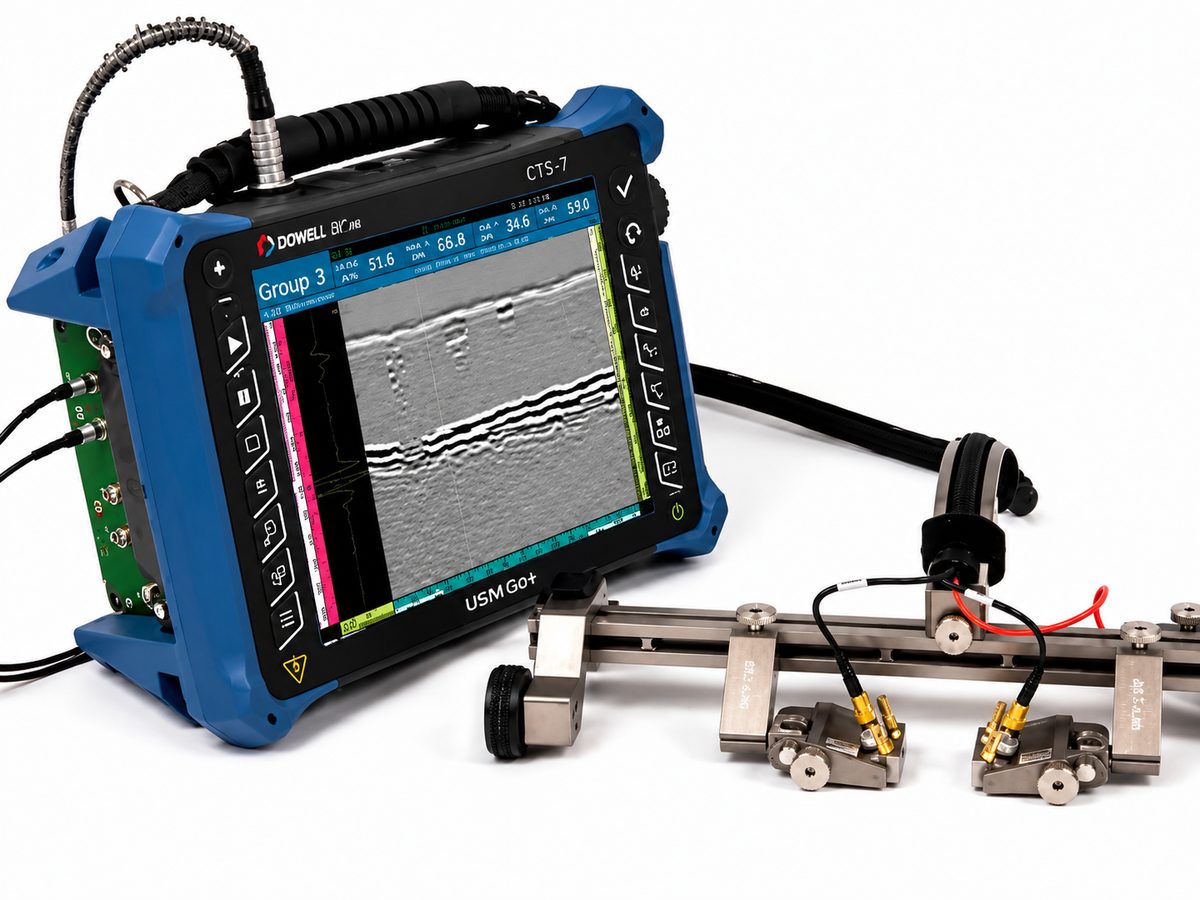
Accurate weld defect sizing and advanced ultrasonic diffraction training
Time-of-flight diffraction (TOFD) is a sensitive and accurate ultrasonic method used for weld inspection and defect sizing. It uses diffracted signals from flaw tips to estimate defect depth and height with high reliability, making it valuable for critical fabrication and in-service assessments.
Time-of-flight diffraction (TOFD) method of ultrasonic testing is a sensitive and accurate method for the nondestructive testing of welds for defects.
TOFD originated from tip diffraction techniques, which were first published by Silk and Ludington in 1975, paving the way for TOFD. Later works on this technique include Harumi et al. (1989), Avioli et al. (1991), and Bray and Stanley (1997). Bray and Stanley (1997) summarized TOFD as tip-diffraction techniques, which utilize the principle that the tips of a crack, when struck by a wave, will diffract the signals back to another location on the surface.
The depth of these tips can be determined from the diffracted energy. TOFD was invented in the UK in the 1970s, initially as a research tool. The use of TOFD enabled crack sizes to be measured more accurately, so that expensive components could be kept in operation as long as possible with minimal risk of failure.
| Duration | 45 hours |
| Track | Advanced UT specialization |
| Best For | Weld inspection and precise flaw sizing |
| Format | Theory + hands-on interpretation |